Posts

The Refugee Convention at 75: a promise we must continue to uphold

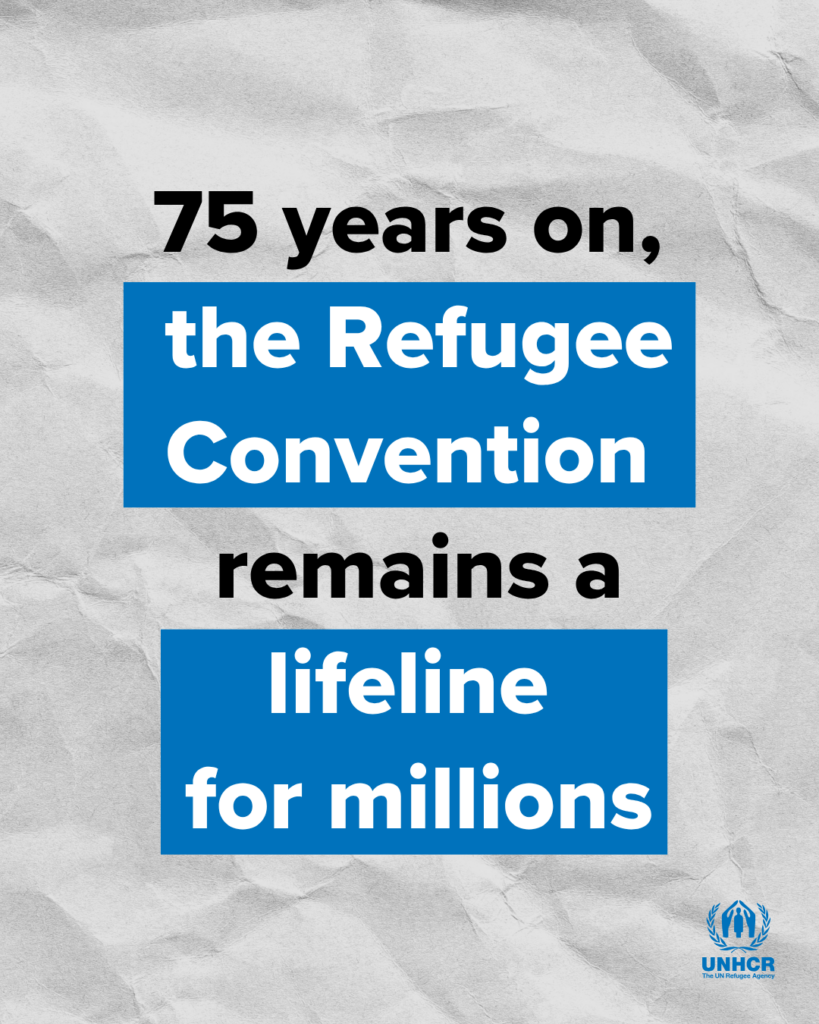
On Tuesday 28 July, we mark the 75th anniversary of the 1951 Refugee Convention. The Convention was created after the Second World War, when millions of people had been forced from their homes. Countries came together and made an important promise: people fleeing war, violence and persecution should be able to find safety.

Seventy-five years later, that promise still matters.

What is the Refugee Convention?

The 1951 Refugee Convention, together with its 1967 Protocol, is the main international agreement protecting refugees. It explains who can be recognised as a refugee, sets out their rights and describes the responsibilities of countries that have signed it.

At its heart is a simple but vital rule: nobody should be sent back to a country where their life or freedom would be in danger. This is sometimes called the principle of “non-refoulement”. The Convention also sets out basic standards for how refugees should be treated, including access to housing, education and work. It is more than a legal document. It is a practical, lifesaving tool that has helped protect millions of people.

A shared responsibility

The Convention recognises that no country can respond to people being forced from their homes alone. Countries need to work together, share responsibility and support the communities welcoming refugees. Fair asylum systems, safe routes and international cooperation all have an important part to play. The UK was one of the original countries to sign the Convention and helped to shape it. This is an important part of our history, but it is also an ongoing responsibility.

Why is it still important today?

The need for refugee protection has not gone away. At the end of 2025, an estimated 117.8 million people around the world had been forced to leave their homes. This included 41.6 million refugees and other people in need of international protection, as well as almost nine million people waiting for a decision on their asylum claim.

Behind every number is a person, a family and a story. People do not choose to become refugees. They leave because staying at home is no longer safe.

The Convention gives countries a clear framework for deciding who needs protection and making sure that people are not returned to danger. It also helps asylum systems work in a more organised, fair and predictable way. Protecting refugees and managing borders are not competing goals. Both can be achieved through fair decisions, effective systems and cooperation between countries.

The Convention needs to be respected

Some people argue that the Refugee Convention is out of date or should be rewritten. UNHCR’s message is clear: the Convention remains flexible, relevant and essential.

The problems facing asylum systems today are not caused by the Convention. The focus should be on putting it into practice properly, through fair and timely decisions, safe routes, support for countries hosting large numbers of refugees and better opportunities for people to rebuild their lives. As UNHCR puts it, the Convention does not need rewriting. It needs respecting.

Facts and empathy matter

Public discussion about refugees and migration is often shaped by misinformation, fear and hostile language. We believe this must change.

People seeking safety should be spoken about with dignity, respect and humanity. We need honest conversations based on facts and practical solutions, rather than language that divides communities or blames people who have already been forced to leave their homes. Refugee protection is not a threat to stability. It helps create safety, fairness and order.

Our commitment at Voices in Exile

At Voices in Exile, we see every day why the Refugee Convention matters. We support refugees, people seeking asylum and migrants at risk who are navigating complex legal systems, insecure housing, destitution and long periods of uncertainty. We help people understand and exercise their rights, access legal and practical support, and begin rebuilding their lives with dignity.

Our work is grounded in justice, solidarity and the belief that everyone deserves safety and fair treatment. We will continue to challenge policies and practices that weaken refugee protection, and to stand alongside people who have been forced to flee.

The Refugee Convention is not only a framework for protecting other people but a safeguard for all of us, because any one of us could one day need the protection it offers.

Read more about the Refugee Convention and access UNHCR’s anniversary resources.
1_(28)

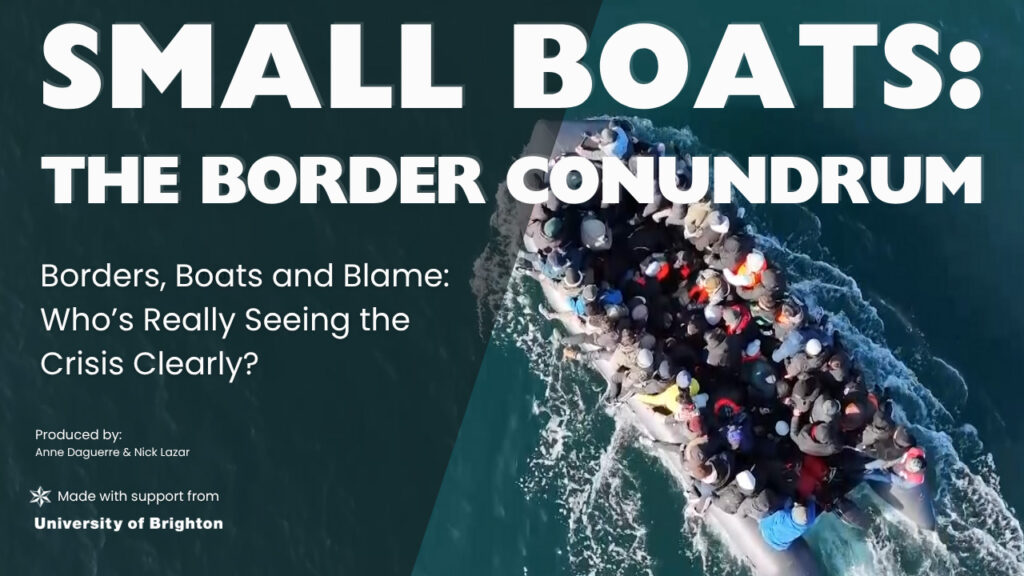
Exploring the border conundrum: Small Boats documentary screening raises vital questions

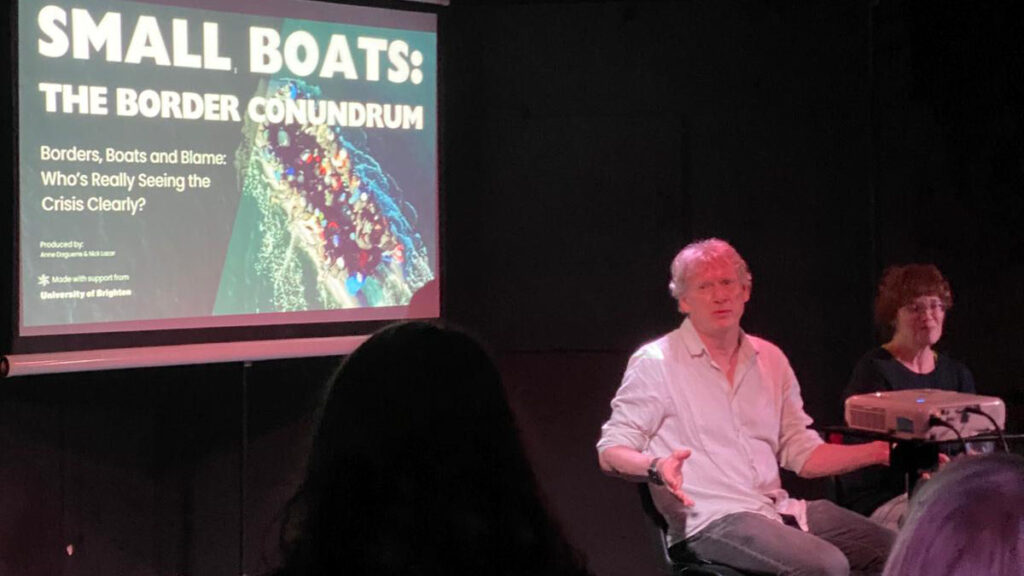
On Tuesday, 5 August, members of our volunteer team attended a special screening of Small Boats: The Border Conundrum at Brighton’s Lantern Theatre. The evening offered a thought-provoking insight into the complex political and social dynamics surrounding small boat crossings to the UK, with box office proceeds and donations going directly to support Voices in Exile’s work. 

The issue of small boat crossings has become a heated political and humanitarian debate, but how do Britain and France each view this crisis? 

Produced by Anne Daguerre and Nick Lazar, this timely film delves deep into the contrasting perspectives between Britain and France regarding migration, border security, and humanitarian responsibility. Through candid interviews with officials, activists, academics, and migrants themselves, the documentary highlights the stark differences and surprising commonalities in how both nations navigate this shared challenge.   

Following a successful premiere at Duke’s at Komedia, Brighton, and a vibrant panel discussion, the film continues to spark important conversations. 

A fresh perspective on the Channel crossings debate 

The documentary takes a fresh angle, focusing on the often-fraught relationship between France and the UK when it comes to migration across the Channel 

and interpolating perspectives from both countries. Rather than centring on the lived experiences of migrants (which the filmmakers noted has been well-covered elsewhere) the film looks at the interplay between politicians, rights groups, and filmmakers, revealing the tensions, misunderstandings, and sometimes flawed assumptions that shape policy and public opinion.  

The documentary also explored the British government’s “smash the gangs” approach, questioning its effectiveness in addressing the underlying causes of dangerous Channel crossings. 

Challenging questions in the Q&A 

Following the screening, filmmakers Dr Anne Daguerre, a social justice policy academic at the University of Brighton, and Nick Lazar, a director, filmmaker and actor, led a Q&A session.  

Audience members asked challenging questions about the absence of certain political voices, the role of the media in shaping public perception, and the need for more context and fact-checking in the national conversation.  

Discussions also touched on issues such as the organisation of smuggling networks, the reasons why many migrants want to leave France, and the realities those who arrive in the UK via other routes and later claim asylum face. 

Why events like this matter 

For our team, the evening was both inspiring and sobering. It underlined the need for more informed, nuanced discussions about migration – ones that recognise the human realities behind the headlines, challenge harmful narratives, and push for policies grounded in justice and compassion. 

We are very grateful to Anne, Nick and the other organisers for not only hosting this screening but also directing proceeds to Voices in Exile, helping us continue our work supporting refugees, asylum seekers, and vulnerable migrants in the local area. 


To find out more about the documentary, including details of how you can watch it, visit smallboatsdocumentary.com. 

Migrant parents screen video message across Westminster

‘This week, Praxis campaigners screened a video message across Westminster to make migrant voices heard on child poverty. The video played on loop around Westminster, parking outside the Department for Education, the Department for Work and Pensions and the Home Office – the departments with the power to make change for migrant children living in poverty. With its Child Poverty Strategy due to be published in Spring, the Government has a unique opportunity to lift families living in vulnerable situations out of poverty and ensure all children can have the best start to life, no matter where they or their parents were born.’

You can watch it here:

We also have a write to Ministers campaign action live if you would like to share.

The shift to eVisas: what you need to know and how to protect your rights

The UK government’s decision to move to a digital-only immigration system is set to take full effect by 31 December 2024. This policy will replace all physical biometric residence permits (BRPs) and biometric residence cards (BRCs) with eVisas. While intended to modernise immigration processes, the transition poses significant risks, particularly for refugees, asylum seekers, and others who rely on accessible documentation to assert their rights.

This article explains the impact of this policy, highlights the challenges it creates, and outlines the actions you need to take to protect yourself.

What is changing?

From 31 December 2024, physical BRPs and BRCs will expire. To prove your immigration status, you must create an eVisa account, which serves as your digital record. This change affects everyone with an immigration status in the UK.

If you haven’t created an eVisa account by the deadline, your leave to remain and entitlements will still be valid, but proving your status could become significantly harder. Service providers like the NHS, landlords, and employers might refuse to recognise your rights if you cannot present proof through the new digital system.

Why this matters

The move to eVisas may seem straightforward, but for many, it creates unnecessary barriers. Refugees, asylum seekers, and others who are digitally excluded or unaware of the changes are at serious risk of being denied their lawful entitlements.

Here’s what you need to know:

  • Digital-only proof is a challenge: Not everyone has access to reliable internet, smartphones, or the skills to navigate complex online systems. This puts many at risk of losing access to essential services.
  • Errors can have devastating consequences: The eVisa system has already been prone to technical errors, leaving thousands unable to prove their status. Any mistakes in your record could lead to wrongful denial of benefits, housing, or healthcare.
  • Lack of awareness and training: Many government departments, landlords, and employers remain uninformed about the transition, leading to confusion and potential discrimination.

What you need to do now

To avoid being negatively impacted by these changes, it’s essential to take action as soon as possible:

  1. Create your eVisa account: Visit the UKVI website and follow the steps to set up your eVisa account. If you need help, ask a trusted advisor or support organisation.
  2. Check your status: Once your account is set up, verify that your details are correct. Any errors should be reported immediately to UKVI for correction.
  3. Gather additional proof: If you don’t have digital access, keep copies of your grant of status letter or other documentation to provide backup evidence when needed.
  4. Inform your service providers: Make sure your landlord, employer, or other relevant organisations are aware of your immigration status and how to verify it.

How to get help

If you are struggling with the transition to eVisas, please get in touch with Voices in Exile and we will do our best to help you, or point you in the direction of further assistance.


Addressing the housing crisis for refugees in Brighton: Challenges and solutions 

Our Generalist Advice Team offers essential support to refugees, asylum seekers, and vulnerable migrants, helping them access welfare benefits, secure housing, and find childcare. However, finding suitable accommodation has become increasingly difficult, especially following the closure of the Home Office ‘hotel’ in Brighton in 2023.  

Last September 2023, our team saw a rising number of homelessness cases among refugees who had been granted status, which was also impacted by the closure of the Home Office run ‘single men’s hotel’ in Brighton in November 2023. The combination of the closure of asylum hotels and the backlog of asylum claims being processed simultaneously led to an increased demand for third sector organisations to support refugees at risk of homelessness. The closure of half of asylum hotels was part of ‘Operation Maximisation’ —a Home Office policy set out on 13th July 2023 requiring single adult asylum seekers to share a room in Initial Asylum Accommodation (mostly hotels).

The Home Office recently reported a plan to make 10,000 decisions in September and maintain this going forward, prioritising those in receipt of asylum support. Therefore, we are concerned that we will see a rise of homelessness for refugees during this winter period due to lack of housing options available; a flurry of decisions being made at once by the Home Office; a lack of mental health evidence asylum seekers hold due to stigma surrounding mental health support; low ability to access this; and long waiting lists.

To prepare for this, we’re working closely with the Refugee/Asylum pathway team at Brighton and Hove Council and attend regular network groups with the NHS and other third sector organisations.

Jesuit Refugee Service’s new report examines experiences of homelessness among people refused asylum in London in Autumn 2023. Most research participants had no secure accommodation, rough sleeping was common, people were vulnerable to exploitation and abuse and prevented from managing life-threatening conditions. We also experienced this in Brighton and Hove, where refugees had been made homeless because of the asylum system when provided with 28 days’ notice to leave Home Office accommodation and find somewhere new to live.

In addition, vulnerable migrants face multiple barriers to access both council housing and private rented accommodation: not being allowed to work for the first 12 months whilst seeking asylum and then only able to apply for the right to work where limited roles are available from the Shortage of Occupation list — therefore gaining no work experience or income. Other factors that create barriers are the ‘no recourse to public funds’ status, low level English skills, and a lack of evidence to demonstrate vulnerabilities and complex needs.

We would like to acknowledge the local agencies that work with us to support our clients in finding accommodation. These include Care4Calais, Thousand 4 £1000, Room for Refugees, Refugees at Home, Brighton Wellbeing Service, Refugee Radio, Network of International Women, Brighton Exiled Trauma Service, and Brighton Therapy Centre.

For more information on the issue of rising homelessness among refugees, check out the below resources:

Some key terms to learn:

  • Asylum Support – Accommodation and Subsistence from Home Office. This is separate from an asylum claim.
  • Shortage of Occupation List – Asylum Seekers can apply for the Right to Work after 12 months of living in the UK, but the roles are limited to what is on the Shortage of Occupation List
  • No Recourse to Public Funds (often written as NRPF) – unable to access public funds such as benefits like Universal Credit, PIP, etc.


Want to do more to help, but don’t know what?

Find out more about hosting a refugee on a short term let here: Refugees at Home

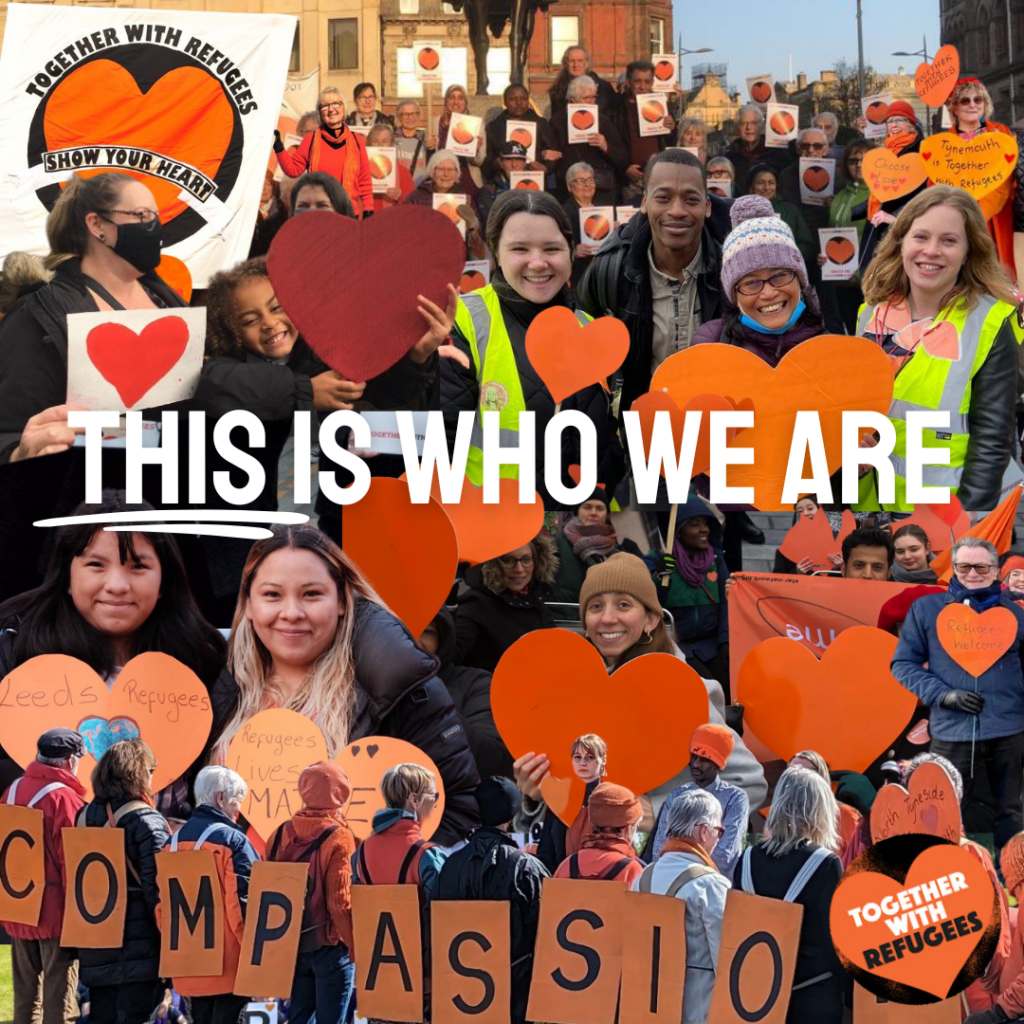
This is who we are: 240 refugee charities stand together in joint response to anti-immigrant violence

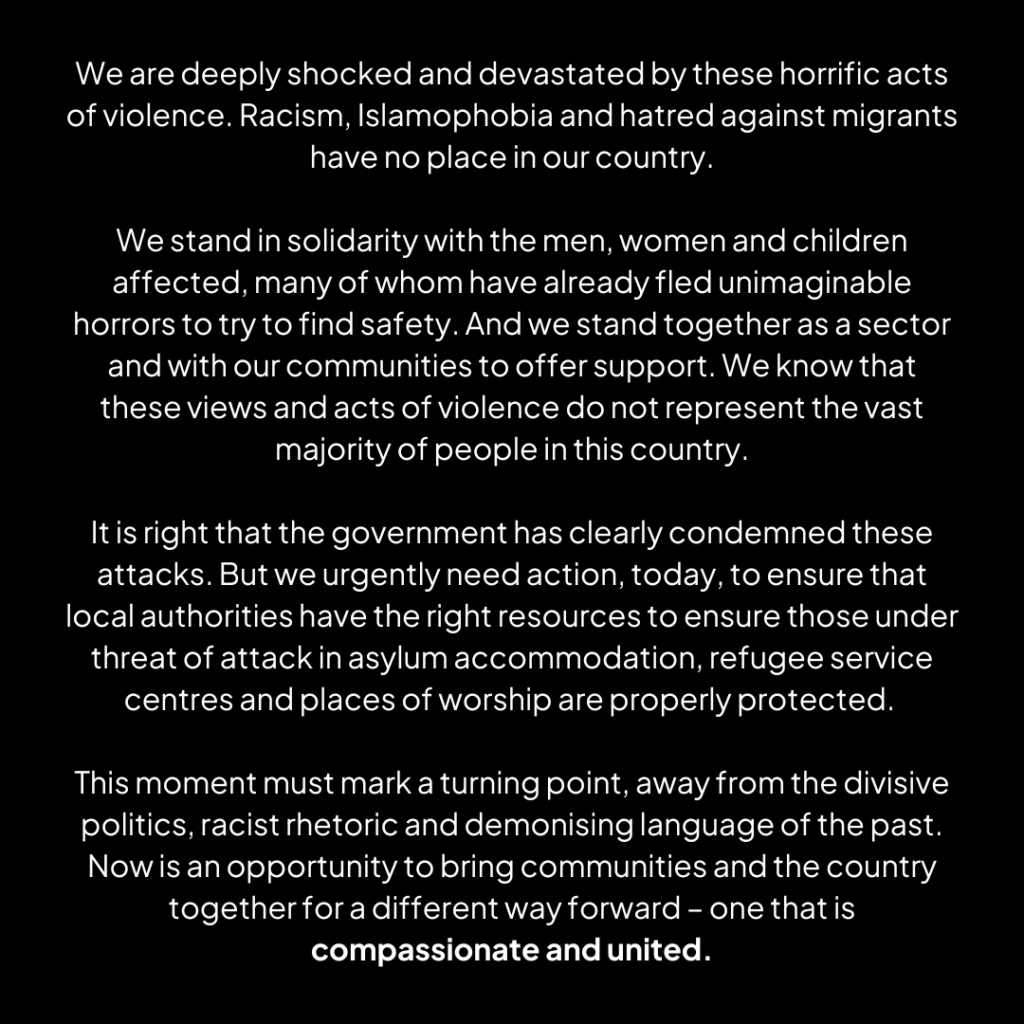
Today we join over 240 orgs to stand in solidarity with those affected by the recent acts of violence across the UK, many of whom have already fled unimaginable horrors to try to find safety.

 This must be a turning point. Read more below:

MORE THAN 200 REFUGEE CHARITIES ‘STAND TOGETHER’ IN JOINT RESPONSE TO ANTI-MIGRANT VIOLENCE

6 steps towards migrants justice

The rights of people who move have been under attack for too long. Our media and our politicians want to make us forget one simple truth: that people move. We always have and always will. We should be welcomed and supported when we do.

We all need rights. We all need safety. We all need dignity. We all need justice. We all need privacy. We all need community.

These are the six steps towards achieving justice for people who move, and a fairer society for us all. These basic principles have been jointly drafted by 45 organisations that work with people who move on a daily basis, and with allied organisations. We see how deeply the hostile policies and statements targeting migrants impact people and their communities. We’re proud to stand behind these six steps towards migrant justice, and a fairer society for all of us.  

  1.   Rights – We should all be able to thrive, no matter where we’re from or the colour of our skin
  2.   Safety – We must welcome people who seek sanctuary in the UK
  3.   Dignity – We must all be able to live with dignity and feel safe in our homes and workplaces
  4.   Justice – We should all be able to defend our rights and hold the government accountable
  5.   Privacy – We should all be able to pursue health, justice and support knowing that our personal data will be kept safe, and our privacy respected
  6.   Community – We all have a right to participate in our communities, and find care and belonging