Meet Garry: Supporting refugees through two essential volunteer roles

Meet one of our amazing volunteers, Garry, a retired social worker supporting both group sessions and casework at Voices. In a recent conversation, Garry shared what drew him to this work, what a typical session looks like, and why he’s passionate about supporting refugees and asylum seekers.

Can you tell us a bit about yourself?

I am a retired Social Worker Team Manager and have been working voluntarily with refugees for the last ten years, working in camps and organisations in Greece and in Calais. Now I work with Voices and with British Red Cross in supporting asylum seekers and refugees.

What made you join Voices in Exile as a volunteer?

I moved to Brighton in 2023 and wanted to continue working with refugees here, as I rotate between London and Brighton. I work with refugees because of their vulnerability and their great potential, that demands reviving after their challenging journeys.

What does a session in your role at Voices look like?

At the morning ViE Group sessions, the people may have workshops on relaxation, and English through games and conversation, but there may also be an information session on anything from welfare benefits to using a camera. In the warmer months, we may go out to local parks for the sessions or to community allotments or farms nearby to relax and enjoy being outside. We try to encourage the members to speak as much English as they can.

The volunteer role is to participate, but also to remain aware of any concerns or questions raised or indicated by people during the session. This can be very simple, such as leading someone through an application for an educational or training course, to advising on more complex issues, such as housing, if we have the knowledge. Longer and complex questions, however, may need to be passed on to case workers.

The volunteer also supports the ‘leader’ of the Group in preparing the session and in clearing up, as well as being another pair of eyes in seeing any needs during the session.

I also work as a volunteer case worker in the afternoon. This usually involves making calls to people the full-time case workers have enquiries from or need follow-up with. This, again, can be simple to complex. I may also see individuals in face-to-face appointments at the office.

Rebuilding safety and stability: How we supported our client

Last year, a mother from Iran who had arrived in the UK on a spousal visa was introduced to Voices in Exile and was connected to our orientation groups. With no recourse to public funds and caring for her teenage child, she faced significant barriers to safety, security and independence.

Over time, she disclosed to our team that she was experiencing domestic abuse. She described controlling and coercive behaviours, isolation from friends, and psychological abuse. Our staff listened, ensured she was safe, and carefully explained her rights and the support available. Although she initially disengaged due to fear and the complexities of her situation, she returned to us when she felt ready – demonstrating the trust built with our staff.

How we supported her

When she reached out again more recently, this time disclosing escalating violence, our team acted immediately. We provided:

Specialist safeguarding and crisis support

Our generalist advice team met with her the same day, put safety measures in place, and coordinated an appropriate referral to children’s services.

Immigration advice

We arranged urgent support from our immigration specialist to help her understand her rights and options. This included applying under the Migrant Victim of Domestic Violence Concession, which was granted within 10 days, giving her access to housing and financial support.

Emergency hardship support

Because she left her home with very few belongings, we provided emergency grants to ensure she and her child had food, clothing, and essential items.

Housing and benefits advice

We worked closely with children’s services to secure temporary accommodation and have continued advocating for a safe and suitable placement closer to her support network.

Community, emotional and practical support

Through our orientation groups and ongoing casework, we offered a space where she felt heard, understood, and empowered to make decisions for herself and her child.

The impact

Thanks to her courage, and the holistic support provided by Voices, she was able to leave an abusive environment, secure financial stability, and begin rebuilding her life in safety. Although she had stepped away from support early on, she returned to us when she was ready. That trust illustrates the lasting impact of our person-centred approach.

She now has secure immigration status, access to benefits, and ongoing advocacy for safe, long-term housing. We continue to provide support to her as she builds a new future for herself and her child.

Looking ahead

The next stage is to provide tailored support in finding employment through our ESOL & Employability caseworker, who will work with her to assess her skills, improve her English language confidence, and identify appropriate training or job opportunities that can help her move towards long-term independence.

Why stories like this matter

Support from our funders and stakeholders allows us to provide specialist immigration advice, housing and benefits casework, emergency hardship grants, safeguarding and crisis intervention, domestic abuse referrals, employment and community based practical support.

Introducing Philip: A passionate new voice on our Board

We’re delighted to have recently welcomed three new trustees to the Voices in Exile Board. This month, we’re introducing Philip, who brings a wealth of experience and a deep commitment to our mission. We caught up with him to learn more about what inspired him to join us and the expertise he brings to the role.

What attracted you to join Voices as a trustee?

I’ve been a volunteer with Voices in Exile since the summer of 2024 as an assistant on the ESOL classes. I really enjoy the experience but have also been struck by the extraordinary commitment, skill and talent of the team at Voices, so when the opportunity arose to become involved as a trustee, I was keen to explore how I could help more.

What experience or skills do you bring that are particularly relevant to Voices in Exile?

Before my retirement in 2024, I was a director of communications in the University sector, leading large communications and engagement teams at a time of change and challenge for higher education. So I have a lot of experience of delivering communications that help enhance reputation, highlight impact, engage people, protect organisations, and convey an engaging and compelling narrative. Having worked at Executive Board level at my last two universities, I also understand some of the pressures and challenges that organisations face and I wanted to bring some of this understanding to my work as a trustee.

What inspired you to join the board?

I worked in the field of migration and refugees at my last two universities. At De Montfort University Leicester, I was involved in work we did with the United Nations to deliver annual conferences on migration in New York, work which culminated in the university being appointed a Global Hub for SDG 16 for peace, justice and strong institutions.

At the University of Kent, I led our successful application to become a University of Sanctuary bringing together and enhancing the work of the university to support refugees through scholarships, outreach, research, fundraising, volunteering and much more. I wanted to continue this work in my retirement as part of the personal legacy of all this work and because these are causes I feel passionately about.

Are there any specific areas where you hope to add value?

I hope I can add value in these areas – communications, building a compelling and engaging narrative around the extraordinary work that Voices does, and around partnership building, and advocacy.

Why do you think our work is important right now?

The political climate is so challenging for the work of Voices and other organisations in this space right now, that the work becomes even more vital. There are so many reasons why we should do everything we can to ensure that refugees are able to play a full part in our national life – moral, legal, economic and cultural – but we also need to ensure that our country is a tolerant, inclusive and welcoming one for our own sakes and for those who come after us and not let ourselves and our true values become threatened and dominated by division and intolerance. Voices and other organisations in this space remind us vividly of our common humanity and of who we truly are.

Outside of your trustee role, what do you enjoy doing?

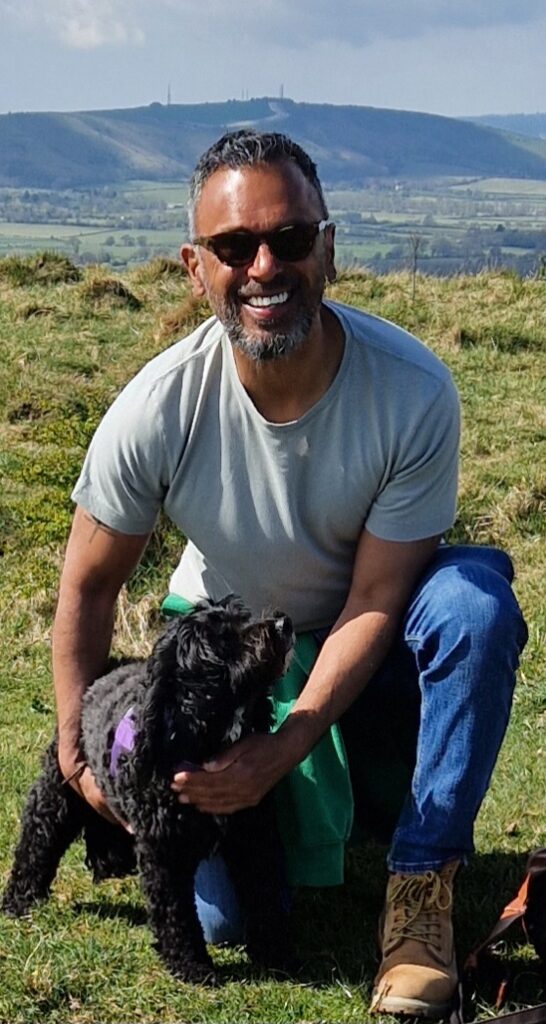
I enjoy music, theatre, cinema and reading. I sing in a choir and I’ve started learning tango. I keep fit by running, going to the gym and walking my gorgeous 10-year-old cockapoo called Betty.

Creativity, connection and plenty of colour in our recent group sessions

Over the past few weeks, our community groups have been busy getting creative, learning new skills and enjoying time together. These sessions are a much-loved part of life at Voices in Exile – a chance for our service users to relax, meet new people and try something different in a warm, welcoming space. 

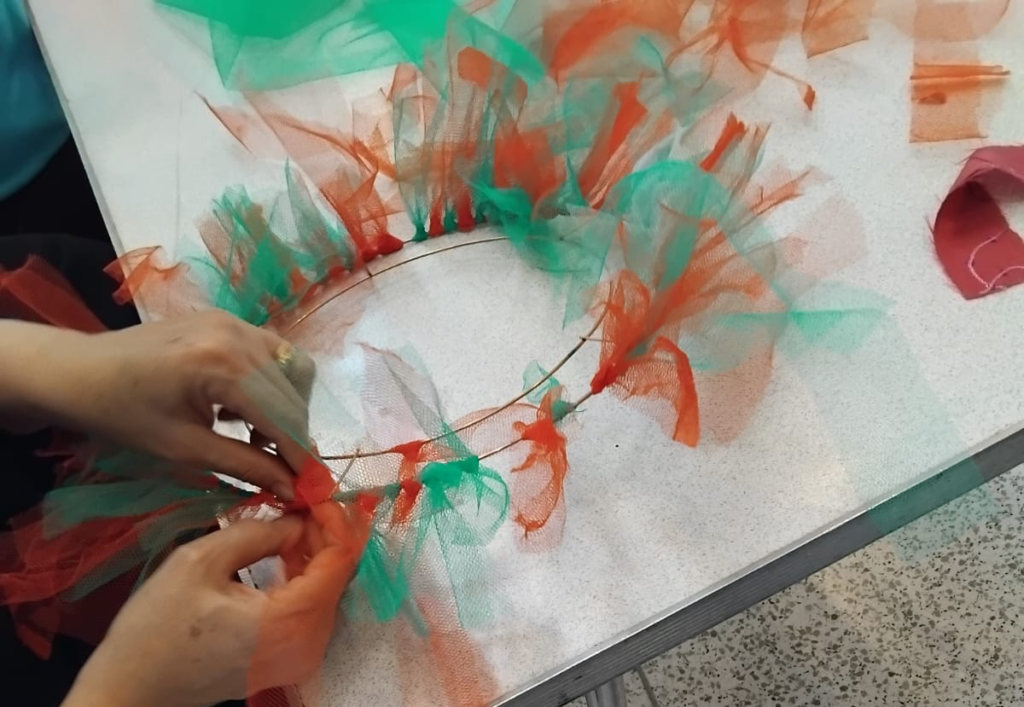
Festive wreath making with Debra 

At the start of December, Debra joined our groups to teach us how to make beautiful Christmas wreaths using everyday rags and simple materials. The results were stunning – bright, textured, and completely unique to each person. Many of our service users took their wreaths home to hang proudly on their front doors, adding a little colour and celebration to the winter season. 

It was a relaxing and enjoyable afternoon full of conversation, shared ideas and creativity. We’re so grateful to Debra for showing us how something simple can become something really special.  

Decorative wall art with artist Jane King 

In November, we welcomed long-time friend of Voices in Exile, artist Jane King, who has supported us with many creative sessions over the years. This time, she guided the group as they made decorative wall hangings using origami paper and cake boards. 

What began as basic materials soon transformed into bright, layered artworks that our service users took home. These sessions give people space to explore their creativity, try new techniques, and enjoy the calm focus that comes with making something by hand. 

A huge thank you to Jane – you can find her on Instagram at @janekingceramics 

A joyful dance session with Anna from Communitas Dance 

This week, our groups were treated to an uplifting dance session at The Dance Space in Brighton, thanks to Anna from Communitas Dance  

Anna introduced the group to movement sequences inspired by samba, Brazilian dance, Bollywood, folk dance and modern styles. The room was full of music, laughter and energy, and the feedback afterwards showed just how much the session meant to everyone. 

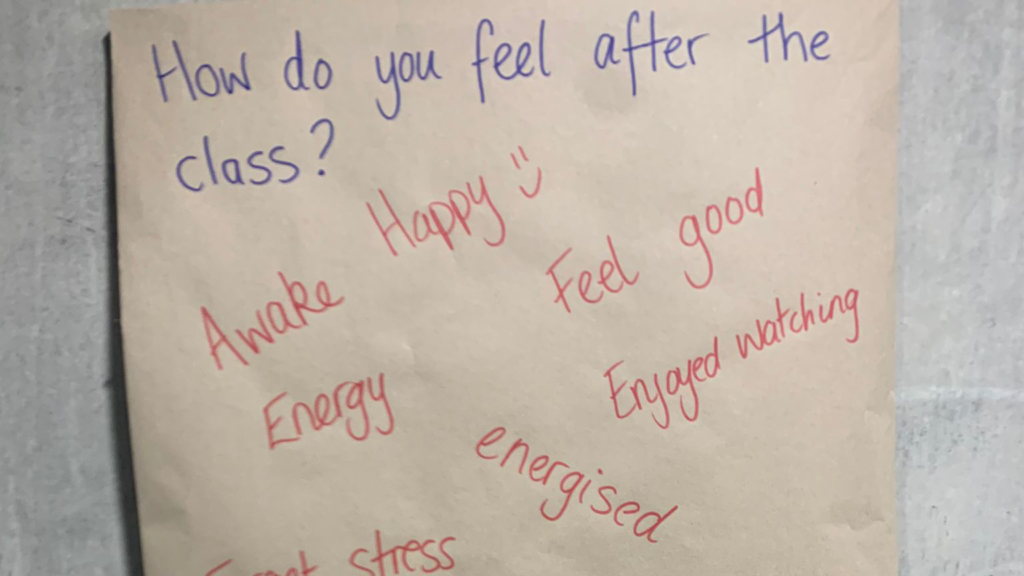
Participants used phrases like “happy”, “energised”, “less stressed” and “relaxed” when asked how they felt at the end of the workshop, which was fantastic to hear. We’re very grateful to Anna and to The Dance Space for such a warm welcome. 

Find Anna on Instagram at @communitasdance. 


For our service users, opportunities like this offer a chance to move, create, and experience joy in community – something that can make a real difference to wellbeing and confidence in difficult times. 

Finding belonging and sharing stories through poetry: Nemat’s journey

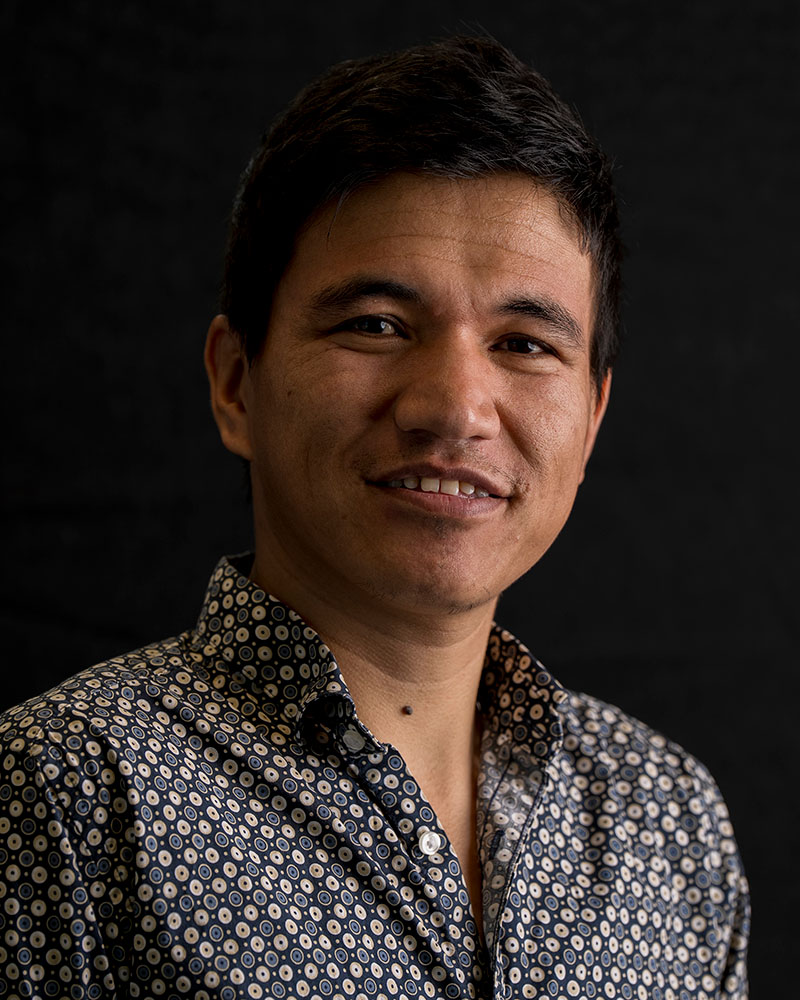
When Nemat Ahangosh came to the UK to study at the University of Sussex, he didn’t expect that Brighton would become the place where he’d rebuild his life and career. Originally from Afghanistan, Nemat’s journey to safety has been one of resilience, creativity and hope.

“I was studying in India but was unable to return to Afghanistan,” Nemat explains. “At the same time, I couldn’t remain in India because the government did not extend my visa after I completed my studies. I applied for a master’s degree at the University of Sussex, received a scholarship, and raised funds for my living expenses to come and study there. After finishing my studies, I applied for asylum and was moved to a hotel in Horley. Later, I returned to Brighton, where I stayed as a lodger for a few months. Once I received my refugee status, I applied for dozens of jobs before finally securing one.”

Building a new life in Brighton

Since arriving in the city, Nemat has found both opportunities and community. “I love living in Brighton. I really enjoyed my time at university, and what I appreciate most about the city is the opportunities it offers to people from all kinds of backgrounds. Support is also available through charities like Voices in Exile,” he says.

While applying for asylum, Nemat searched online and discovered Voices in Exile. “I called them and later attended a few gatherings at All Saints Church in Hove, got support from the food bank and received guidance on job applications and interviews, and CV,” he explains.

Inspiration through poetry

Nemat’s love of poetry runs deep and has become an important way for him to express his experiences and connect with others. “My love of poetry comes from people’s stories and struggles — especially those of marginalised people like myself and those around me,” he says. “I’m inspired by stories that are difficult to live but powerful to share.”

A new chapter

Now, Nemat works as a library and information officer with the council — a role that has given him stability and freedom to continue pursuing his passion. “I feel great about my new job,” he says. “The salary allows me to live more comfortably, support my family a little, and afford trips to share poetry. For example, last week I went to Germany, where my friends organised an event and my poems were read in German, English, Dari, and Pashto.”

Sharing poetry and peace

In June, during Refugee Week, Voices in Exile and the Unitarian Church Brighton hosted a special service where Nemat read from his recently published poetry collection, The Color of Peace. His moving words captured the strength and spirit of those who find new beginnings in unfamiliar places.

If you would like to read some of Nemat’s poetry, you can purchase his book here:
The Color of Peace by Nematullah Ahangosh | Waterstones

English classes bring success while building a sense of community

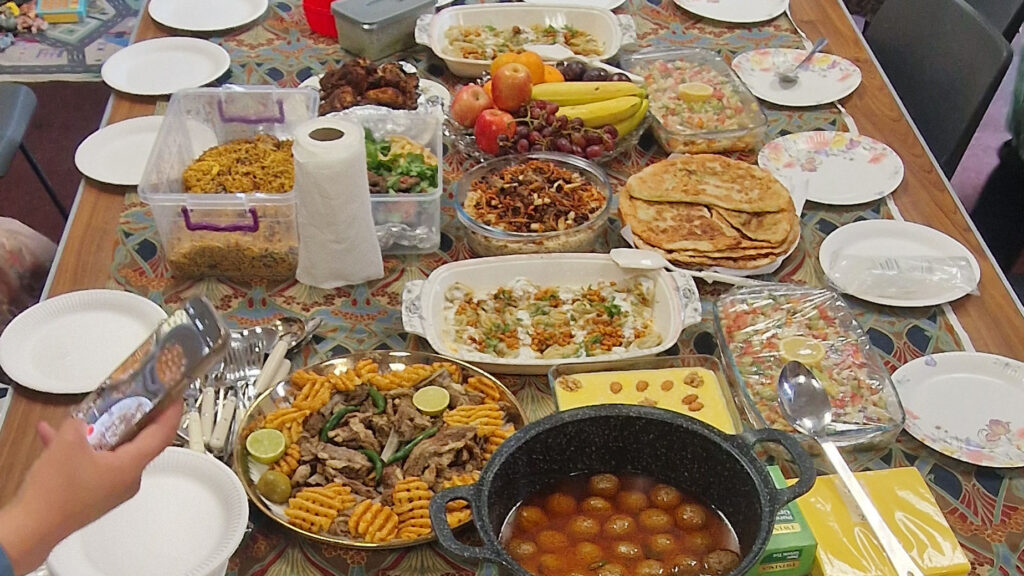
More than 40 clients of Voices in Exile celebrated the completion of their pre-entry and entry level English language studies at the end of the summer term. Many brought Afghan and Iranian food to share at the event to celebrate their achievements and to thank teachers, childminders and volunteers for their work across the year. 

Building skills and confidence

The ESOL (English as a Second or Other Language) classes were run by qualified and highly experienced teacher, Tilly, who taught ViE clients at St Mary’s Community Hall in Kemp Town. 

“Language skills are key to our sense of belonging and our place within a community,” says Tilly. “ESOL classes are therefore a vital strand of Voices in Exile’s work to support refugees and vulnerable migrants in Brighton and East Sussex. They give practical skills but they also build confidence, friendships and a vital sense of community among those who attend.”  

Overcoming challenges together

Tilly acknowledges the challenges faced by clients and the significant distance travelled since the classes started last year: “The ability range amongst our clients was huge. Some were unable to hold a pen having never been to school in Afghanistan. Others were confident with English at Levels 1 and 2. We helped the beginners over the year most because their need was the greatest. To keep focus and motivation for each client they were given workbooks tailored to their level of ability and homework which was marked regularly.”  

Tilly is generous in her praise of childminders and volunteers who enabled clients to receive the one-to-one tuition that she says was essential. “We were very fortunate with our child minders, Azadeh and Sheri, who were wonderful with the little children not old enough to go to nursery and therefore came to class with their mothers.” 

Finding friendship and belonging

While proud of clients’ success in improving their language skills enabling next steps in education or work, Tilly explained how the classes have also given clients broader skills and have provided a vital lifeline to counter isolation and opportunities to develop friendships and a wider sense of community. 

“The classes have enabled clients to meet and get to know one another in a friendly and informal environment,” she says. “They joined a WhatsApp group run by the very impressive Fareshta and strong friendships have been formed. The success of this group is down to the motivation of the clients, tailored resources and a fantastic group of volunteers.” 

Paarwana is a client and regular attendee of the ESOL classes. She agrees that the classes have been about much more than learning, important though that has been. “I really enjoyed the classes,” she says. “I’ve met different people and different friends. When I came here at first I was alone and I found lots of different friends. Often my husband comes too. It was very good for both of us. We got a lot of confidence and learnt a lot about Brighton. The teachers were very kind.” 

End the private contractor’s greed in asylum seeker housing: BBC News story

In August, Voices signed onto a statement with 60 organisations calling for an end to using for-profit private contractors in the delivery of housing for people seeking asylum. We also pushed for a story to be used by BBC News, highlighting the unliveable conditions experienced by those in the hotels.
The story was published this morning by the BBC – have a read: https://www.bbc.com/news/articles/ce9r5m74de8o
A screenshot from the BBC article

Meet Anerley: Generalist Advice Caseworker at Voices

This week we’re introducing Anerley, one of our dedicated Generalist Advice Caseworkers. Anerley is part of the team providing vital, day-to-day support to our clients, helping people navigate complex systems and access the rights and services they’re entitled to.

What is your name and role at Voices in Exile? 

My name is Anerley and I’m a Generalist Advice Caseworker here at Voices in Exile. I’ve been involved in the organisation for 3 years, before this I supported young adults aged 16-25 years old at The Youth Employment Hub and have managed my own caseload for over 5 years.

What does your role involve? 

My role involves casework and advocacy around housing, asylum support, welfare benefits, destitution, section 17, care act, financial inclusion, health and wellbeing, skills and development. A typical day is so varied so I’ve included what my role has looked like over the last couple weeks.

I’ve provided outreach advice in the food bank and external sessions provided by Network of International Women. This week I’ve been training new Casework Volunteers who have joined our Generalist Team. I’ve assisted clients with casework and advocacy for PIP and advice on housing decisions. I’ve referred clients to solicitors for housing and section 17 and supported them to sign legal aid documents. I’ve attended a network meeting with the No Accommodation Network (NACCOM), Temporary Accommodation Action Group Brighton and Hove, Casework Solidarity Forum in London as well as attending internal meetings with my team. I’ve supported with hardship grants to migrants, and I’ve also assisted with signing parents up to AMAZE and referrals to Hummingbird Project.

What do you enjoy most about your role at Voices in Exile? 

Connecting with people who have unbelievable resilience and supporting them to integrate into the community.

During one off advice sessions, I often feel this casework support is very limited as we provide 1-5 hours of advice and support compared to the longer-term casework where support can last several months. Nevertheless, one of the most fulfilling aspects of my role is referring clients to local community groups and seeing the transformation that follows. These spaces offer opportunities for peer support, advice, and genuine connection, helping clients build independence and a sense of belonging.

For instance, I supported a client who had recently claimed asylum and was experiencing severe isolation while living in an asylum hotel. I connected them with VYD CIC (a football group for people with refugee status and people seeking asylum) and the Brighton Table Tennis Club. Just a month later, they were volunteering and expressed deep gratitude for being introduced to these services. Seeing him smile felt great.

What’s something about your role or our work that you think people might not know?

There are a few things we do that people might not always be aware of. We match Migrant Support Volunteers with clients who have specific needs – for example we may set up sessions with a Migrant Support Volunteer to improve someone’s confidence with using public transport or post office. The sessions could focus on getting to know the area, practice for theory driving test, feeling nervous about accessing external support groups. We’ve had amazing feedback about the difference ViE Volunteers make in helping people feel more confident and connected to where they’re living.

We’re also active beyond our day-to-day support. We regularly present case studies and client experiences at network meetings to influence local and regional policy. We advocate for the voice of lived-experience to be centre of conversation at network meetings. Our team provides training to external organisations on how to support people with refugee status, seeking asylum and migrants with compassion and best practice. Even when we’re closed to referrals for longer-term casework, we are providing advice and support to new clients during outreach sessions. We support many people in the city living in asylum accommodation who might otherwise be left without access to help.

Meet Becca: Resettlement Caseworker at Voices in Exile

This week, we’re getting to know Becca, one of our Resettlement Caseworkers. Becca works closely with families who have recently arrived in Brighton and Hove, helping them to settle into their new community and build the skills and confidence they need to thrive in the UK.

What is your name and role at Voices in Exile?

My name is Becca and I’m a Resettlement Caseworker at Voices in Exile.

What does your role involve?

I work with people who have been resettled in Brighton and Hove. All of my clients are from Afghanistan at the moment, which is true for most of the team. We support people to access the services they need and are entitled to, so that they can live full and independent lives in the UK.

I work with around seven families and they each get 2 years of casework support, which means we often get to know them quite well. I help people to access and understand their benefits and healthcare, set up accounts and pay bills, understand their budgets and access social opportunities so they can meet new people.

Our clients also work with our dedicated ESOL and Employability Caseworkers who support them to improve their English, if they need to, and to find work.

What do you enjoy most about your role at Voices in Exile?

Seeing people build up skills and confidence as they settle into the local area is a lovely part of  my job.

Recently several of the women I work with have all started attending ESOL (English for Speakers of Other Languages) class for the first time. For some of them it’s the first time they’ve been in a classroom and written or read in any language. Some people are unsure if they can learn English and joining a class is a huge step. They’re all doing really well and have started to use English in our appointments. It’s brilliant to see and means that they can be more empowered and independent in their daily lives.

What’s something about your role or our work that you think people might not know?

We do a lot of practical things with our clients but sometimes the most helpful thing we can do is listen and make people feel heard. Starting from scratch in a new place and culture is a long and complicated process, giving someone a safe space to say how they feel and ask questions and can be just as helpful as filling out a form.